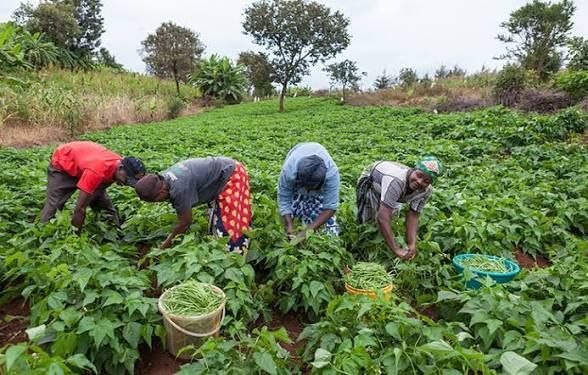
Farming, as an activity, is a gamble with forces that cannot be wholly controlled by a farmer. One year can be full of plenty, with fields of gold, and productive stock, and fine market rates, and the following year can destroy all in one drought, or one flood, or one plague of pests. Farming insurance is not only a safety net in such an unpredictable landscape, but it is a strategic need.
Understanding Farming Insurance
Farming insurance, in its most basic form, is meant to protect farmers against any losses that are occasioned by uncontrollable situations. This may include natural disasters or market volatility, equipment damage, or even liability. But to consider it as protection, would be a mild way of putting it. It is in most aspects the foundation of sustainable agricultural planning.
Various farmers are exposed to various risks. A rice farmer in a flood-affected area faces completely different problems than a dairy farmer or a horticulturist. It is due to this reason that farming insurance is not a one size fits all solution- it is a tailor made framework.
Farming Insurance types.
1. Crop Insurance
The most familiar one is crop insurance, which secures farmers against losses that may arise as a result of natural disasters like drought, floods, cyclones, hailstorms, and even pests.
Certain policies are used to recuperate losses in yields and others are used to cover changes in revenue. To put it in simple terms, in case of failure of your harvest- or prices go down- you are paid.
But, there is subtlety here. Other plans are based on area-based evaluations as opposed to on-farm losses. This implies that you will not get paid on your field but the performance of the entire region. It is effective, all right–but is at times irritatingly general.
2. Livestock Insurance
Animals are assets. Valuable ones. And in common with all assets they are accompanied by risks-disease, accidents, or unexpected death.
Livestock insurance is coverage that includes compensation in case covered risks result in the loss of the insured animals. Policies may be customized to suit large or small scale and type of farming activity whether it is cattle, poultry, or sheep.
3. Farm Equipment Insurance
The modern agriculture depends greatly on the use of machinery-tractors, harvesters, irrigation systems. They are costly investments and their failure or destruction can put the whole business to a halt.
The farm equipment insurance will make sure that you do not end up crippled by the cost of repairing or replacing. Even theft is addressed by some policies, which is becoming a more topical issue in rural areas.
4. Liability Insurance
This is not given much thought- but it should be.
Liability insurance will cover any legal and financial repercussions in case someone suffers injury on your farm, or your operations leads to the destruction of another property. This is particularly important to farms that practice agritourism or direct sales to consumers.
5. Weather-Based Insurance
Weather-based insurance, as opposed to the conventional insurance, is based on pre-determined weather conditions, such as rainfall or temperature.
Payouts are automatically activated in case of the violation of those parameters. No field inspection. No lengthy verification. Just data-driven compensation.
The importance of Farming Insurance.
Agriculture is capital intensive and price elastic. One bad season is enough to erase years of hard work. Insurance brings about stability in a very volatile environment.
But more than financial protection it does something smaller–but no less important. It builds confidence.
Insured farmer will invest in superior seeds, techniques or equipment. Why? Due to the decrease in the risk of the complete loss. And where risk is handled, growth can be achieved.
Some of the Factors to put into consideration prior to selection of insurance.
Policies are not made equal. One should think before making the right choice.
Coverage Scope
What is covered in particular? Natural disasters? Market fluctuations? Theft? Always read the fine print.
Premium Costs
Reduced premium costs can be alluring- but usually with a restricted cover. Strike equilibrium between cheapness and sufficiency.
Claim Process
Insurance can become a pain in the neck due to a complex claims process. Seek schemes that have clear and efficient settlement of claims.
Government Support
Governments in most countries subsidize agriculture insurance. These plans are capable of costing a lot less and providing a wide coverage.
Exclusions
Any policy is not without exclusions. It is as important to know what is not covered as well as what is.
Difficulties with Farming Insurance.
Although it is a crucial topic, farming insurance is not devoid of shortcomings.
Delayed settlement of claims is a cause of many farmers not knowing or their lack of confidence in the system. There are situations where the compensation is not a true reflection of the loss. Next is accessibility- small-scale farmers, particularly in remote regions, have a hard time enrolling.
Technology is aiding in closing some of these gaps. Insurance is becoming more transparent and available with the help of satellite imaging, mobile apps and digital records. Nevertheless, there is a long way to go.
The Use of Technology.
Farming insurance is unquestionably in a digital future.
Crop health can now be determined in real time by satellite data. Drones give precise field-level information. AI anticipates risks prior to their occurrence. A combination of these tools is revolutionizing the way insurance is computed, sold and recovered.
But despite all this progress the human factor is vital. The extent to which these innovations are embraced will depend on trust, awareness and education.
Final Thoughts
Farming insurance is not simply a recovery after the loss- it is about being prepared against uncertainty. It enables farmers to make calculated risks, to be innovative, and to expand without always being afraid of a total financial disaster.
The significance of agriculture insurance will only grow in a world where climate change is causing greater uncertainty. It is no longer a question whether farmers should have insurance, but whether they can use it effectively or not.
Farming will never be risk-free since there will always be risk at the end of the day. However, it need not be ruinous with the proper protection in place.